A certification registry, designed from the front door to the back office.
How I connected a public website and veterinary application process to the more demanding work of reviewing, managing, and publishing registry records.
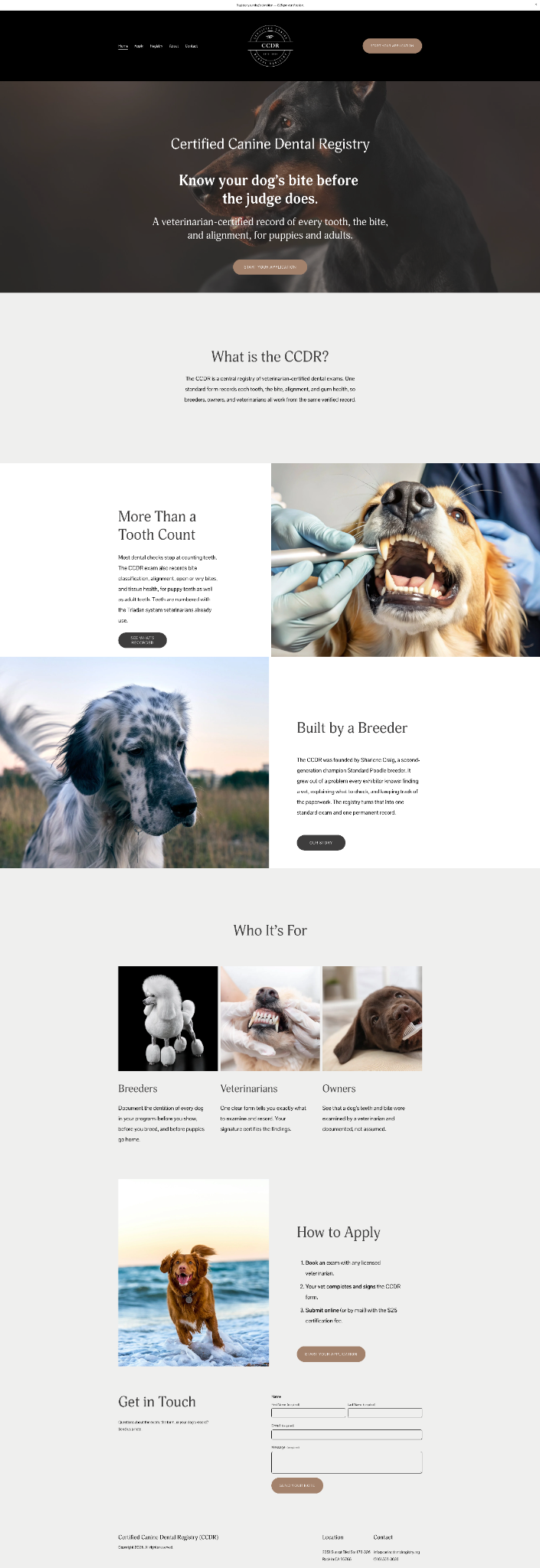
A submitted form isn't a registry record.
The registry needed to serve two experiences at once: clear participation for breeders, owners, and veterinarians, and reliable case management for the organization.
Behind the public experience, this small organization needed to connect each dog to its exam, payment, and consent; review submissions; protect private information; and publish only what was eligible.
Design. Structure. Build.
I designed and implemented the public website and structured submission experience, then defined the registry’s record relationships, review steps, exceptions, and publication requirements. I also built the administrative prototype in Baserow and tested its core review logic.
01 / Design the experience
Organize specialized information into clear audience pathways and an understandable application process.
02 / Structure the work
Define how an application moves from receipt to review and publication—and what happens when information is missing.
03 / Implement and test
Build the public-facing components and a configurable administrative prototype, including case views and eligibility logic.
Move beyond a form-first system.
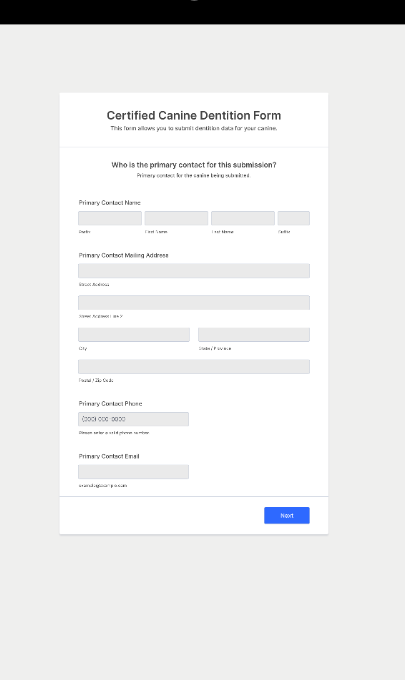
Jotform works well for collecting structured information. It was less suited to the intended searchable directory, individual record pages, and ongoing administration. Extending the form tool to do all of those jobs would have meant increasingly awkward workarounds.
I moved the administrative design to Baserow, a database and application builder that links related records (a dog, its exam, its payment, its case) while keeping the existing public site and application form in place during development. The goal is to fit the technology to how the registry actually operates, rather than forcing those requirements into a form builder.
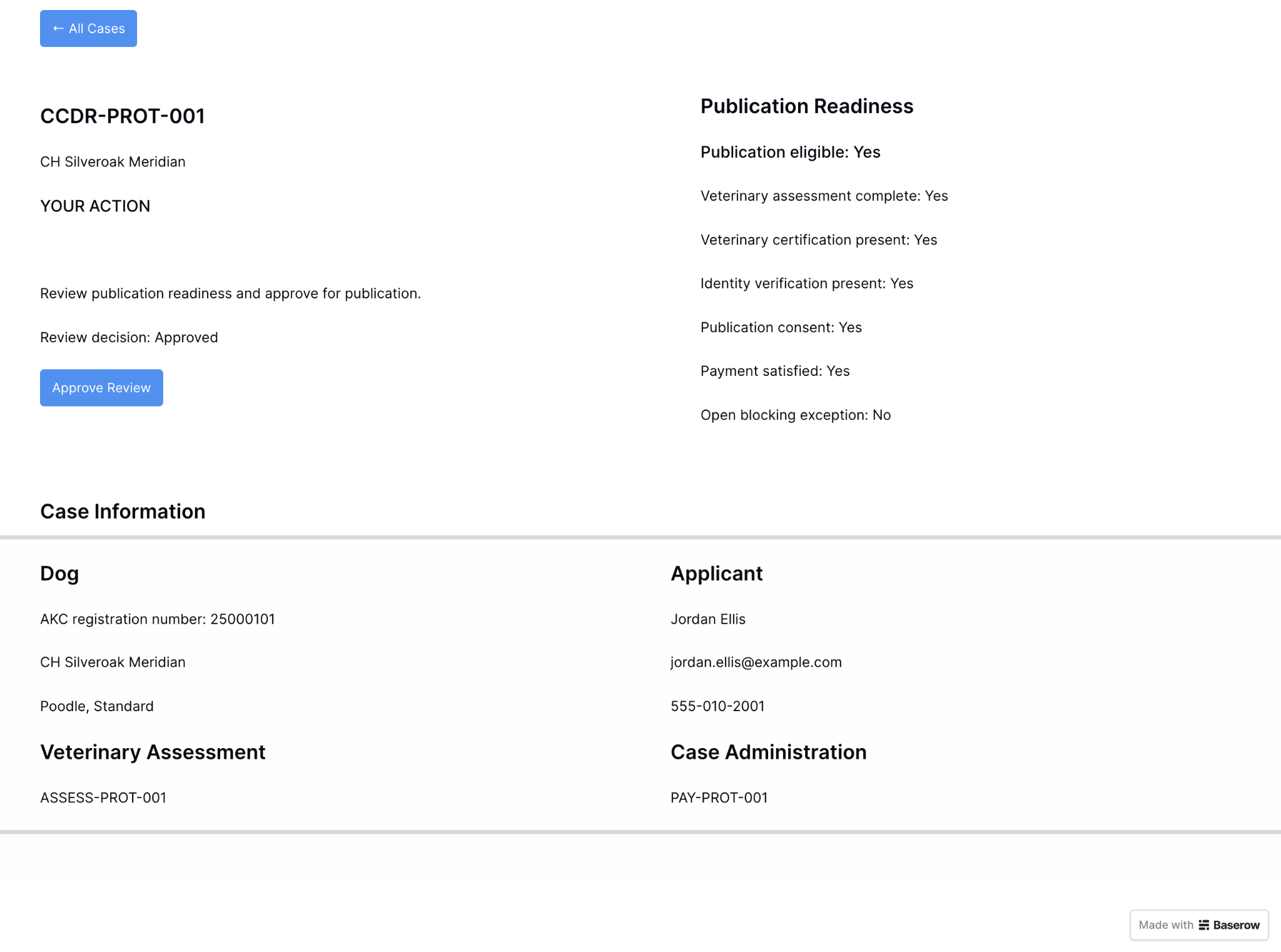
Make the next action visible.
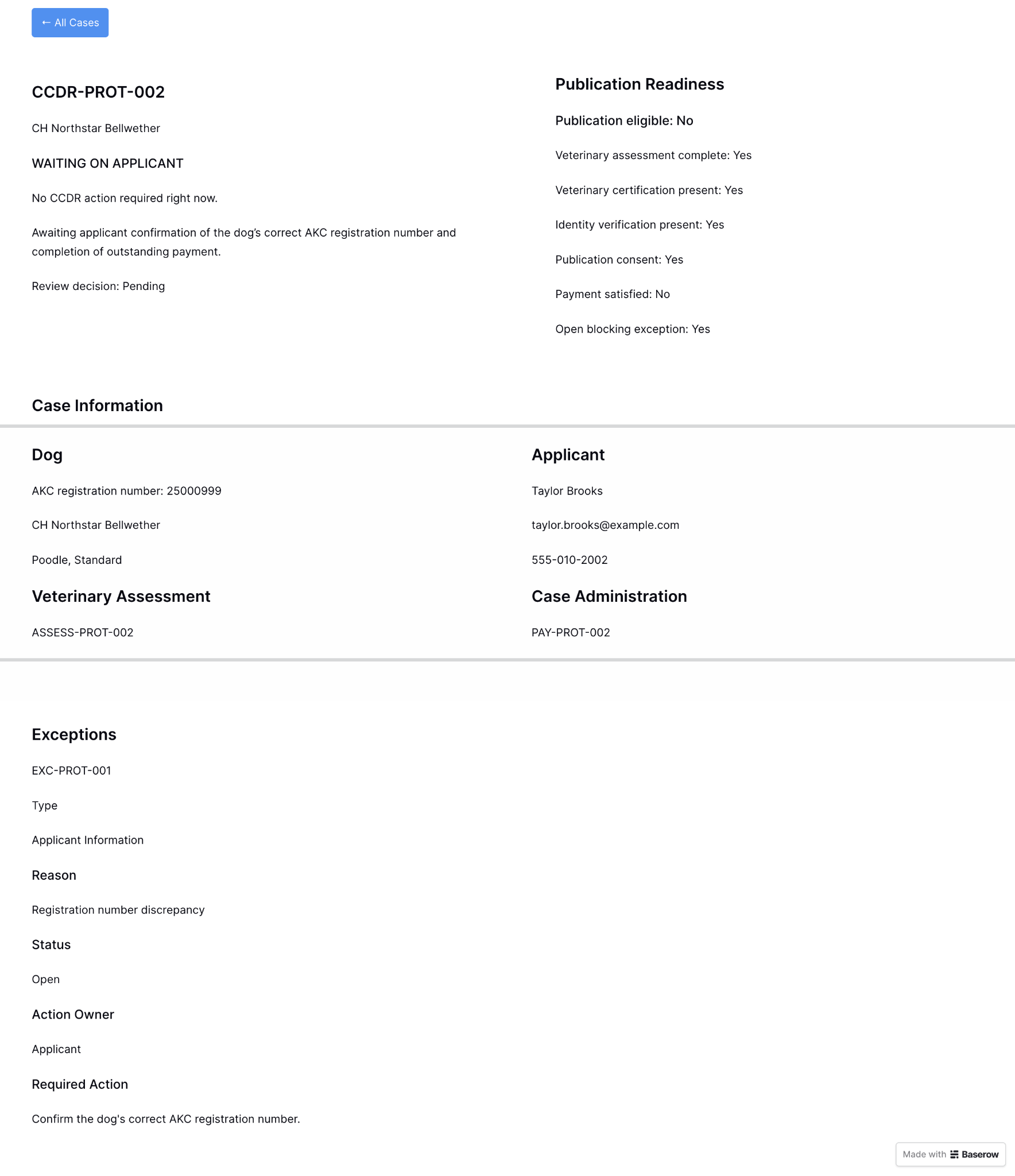
Rather than treating every application as an isolated entry, I designed related records for dogs, cases, veterinary assessments, payments, and exceptions. The administrative prototype brings case status, required actions, and review decisions into one working view.
This matters because a small organization needs to know not only what information it has, but also what remains to be done and who should act next.
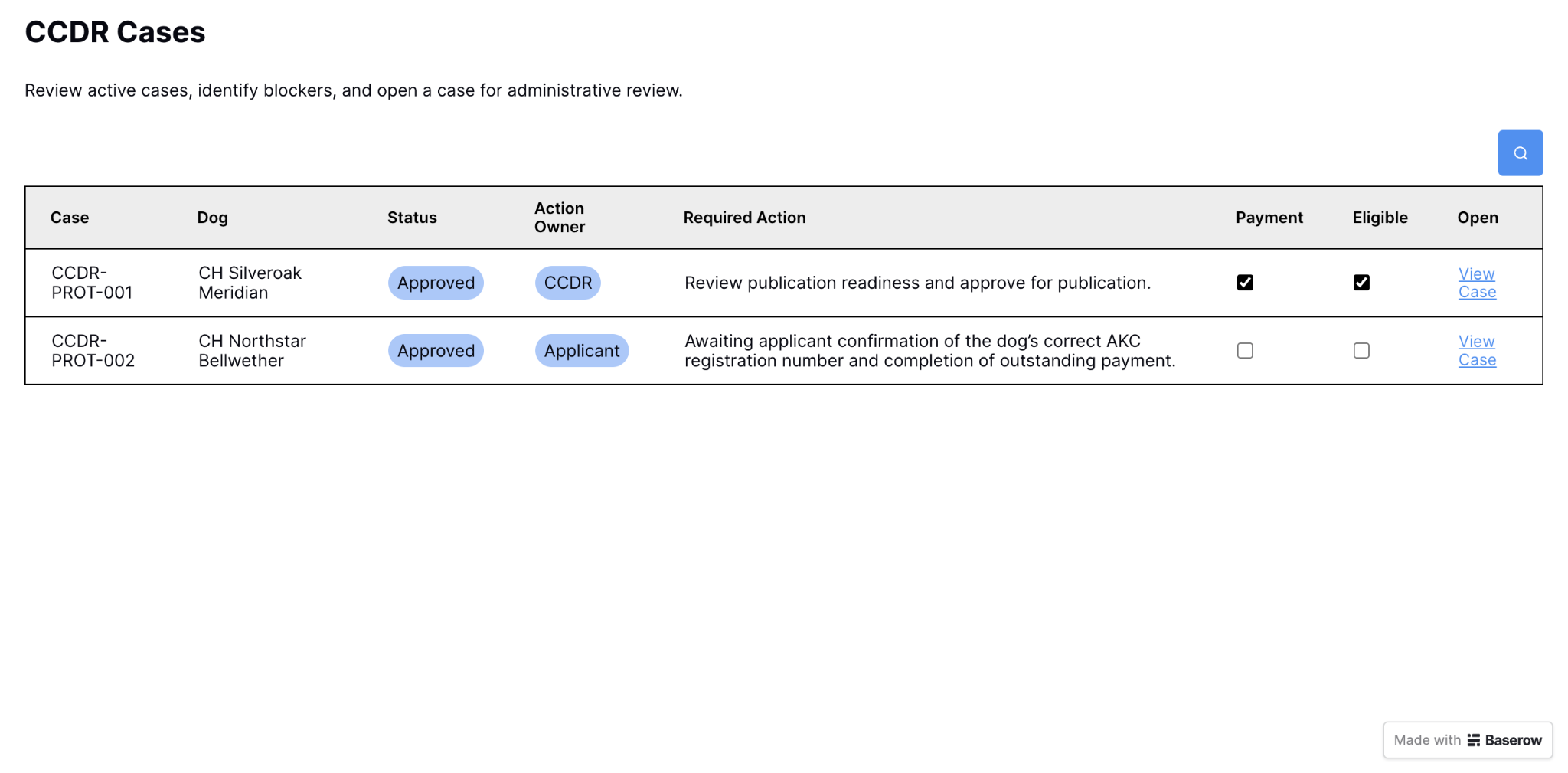
Approval isn't automatically permission to publish.
A case may pass review yet still lack a required condition, such as consent, payment, or a necessary assessment. I designed review status and publication eligibility as separate checks. In the prototype example shown, review is still pending and publication is blocked by outstanding payment and an unresolved registration-number exception.
Live up front. In testing behind the scenes.
Public Squarespace website, Jotform application, and public registry display.
Baserow administrative prototype, with the data and workflow design behind it. Remaining work: end-to-end validation, planned public directory transition, and handoff to the owner.
Does your process break after someone clicks submit?
I help businesses connect a clear customer experience with the practical workflows needed to deliver on it.
Discuss your project →